PUBLICATION SERIES
Edited by Hassan Elmouelhi, Hellen Aziz
Contemporary Arab Urbanism
Governance and Participation, Public Space in Arab Countries
The publication brings together research produced in the Contemporary Arab Urbanism seminars at Technische Universität Berlin between 2023 and 2024. Developed within the framework of the PRGPS research project, the study investigates how public spaces in the Arab region are shaped by governance structures, socio-political dynamics, and emerging participatory practices.
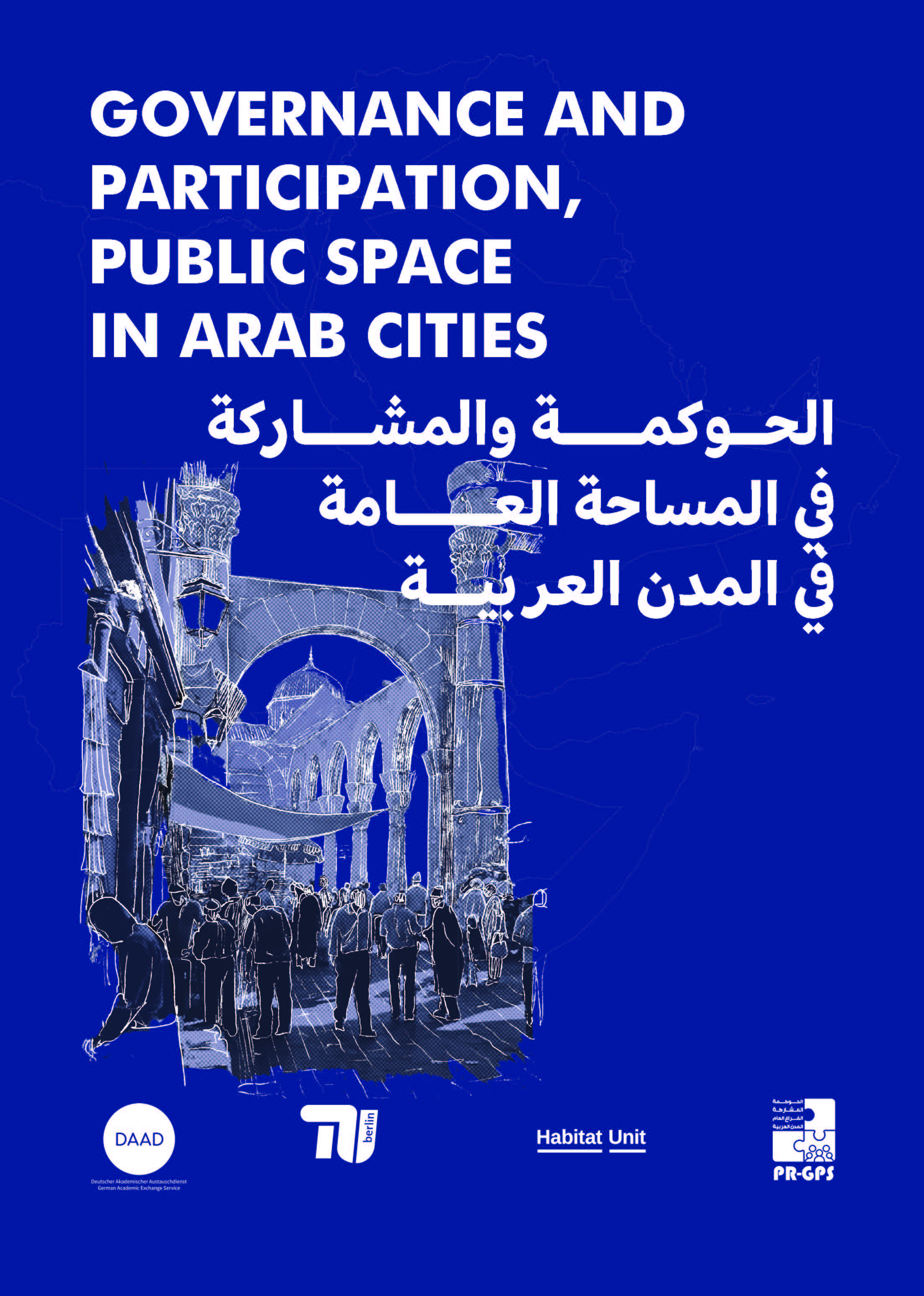
Covering Gulf countries, conflict and post-conflict contexts, middle-income states, and least-developed countries, the publication combines case studies, comparative analysis, and cross- country perspectives. It highlights both challenges and opportunities for inclusive urban transformation, while situating public space at the core of debates about citizenship, rights, and collective life. This book provides a reference for academics, practitioners, and policymakers engaged with contemporary Arab urbanism.
This report is a part of the Power Relations in Urban Governance: Participation in Public Space of the Arab Cities (PR-GPS), funded by DAAD the program of Ta‘ziz Partnerschaft - Netzwerke 2023-2025.
Authors:
Contemporary Arab Urbanism II Seminar (SoSe 2023):
Yemen: Nagla Salah
Jordan: Jehad Taqatqa, Omar Aboutaleb
Syria, Yemen, Palestine and Lebanon: Hannah Berner, Leon Kesselhut, Max Raucamp, Clara Leonie Sommer, Boushra Yagan, Jair Ortega Castañeda Gulf Countries: Elnaz Shafiezade, Pedram Jahanian, Anas Mahli, Rabeea Abbasi, Saleh Ahmed Qazi
Contemporary Arab Urbanism III Seminar (WiSe 2023):
Libya: Salma Elbasty
Morocco: Adriana Bayón Visiedo, Laila Simone Boukar, Yiwei Dang Iraq: Bayan Mirzakeyeva, Zubaidah Aali
Oman: Madita Goll, Amalia Ardian
Palestine: Omar Tbakhi, Nadine Hani Abdelghani, Gabriela Muniz
Contemporary Arab Urbanism IV Seminar (SoSe 2024):
Least Developed Countries: Salma Elbasty, Bailey Gray, Augustin Heinen, Johanna Scocco
Conflict/ Post-conflict Countries: Daria Kurbatova, İnci Nazlıcan Sağırbaş, Marcus Matznick, Zofia Zatorska, Omar Tbakhi, Zubaidah Aali
Middle Income Countries: Amalia Ardian, Heze Wang, Venice Lamech, Saimi Eromäki, Filip Bobras, Tatia Kiknadza, Youssef Baseet
Gulf Countries: Lucas Hartmann, Jasper Reidt, Sucheta Bhattacharyya, Ida Hennes, Michel Krach, Mahrokh Aghnoum
Download here.
Public Space in Historic Districts in Arab Middle-Income Countries
The publication examines the cultural, social, and political significance of historic quarters across Morocco, Algeria, Tunisia, Egypt, and Jordan. These districts, rich with Islamic, Arab, and Mediterranean influences, form critical nodes of collective life while facing mounting pressures from urbanization, tourism, and modernization.
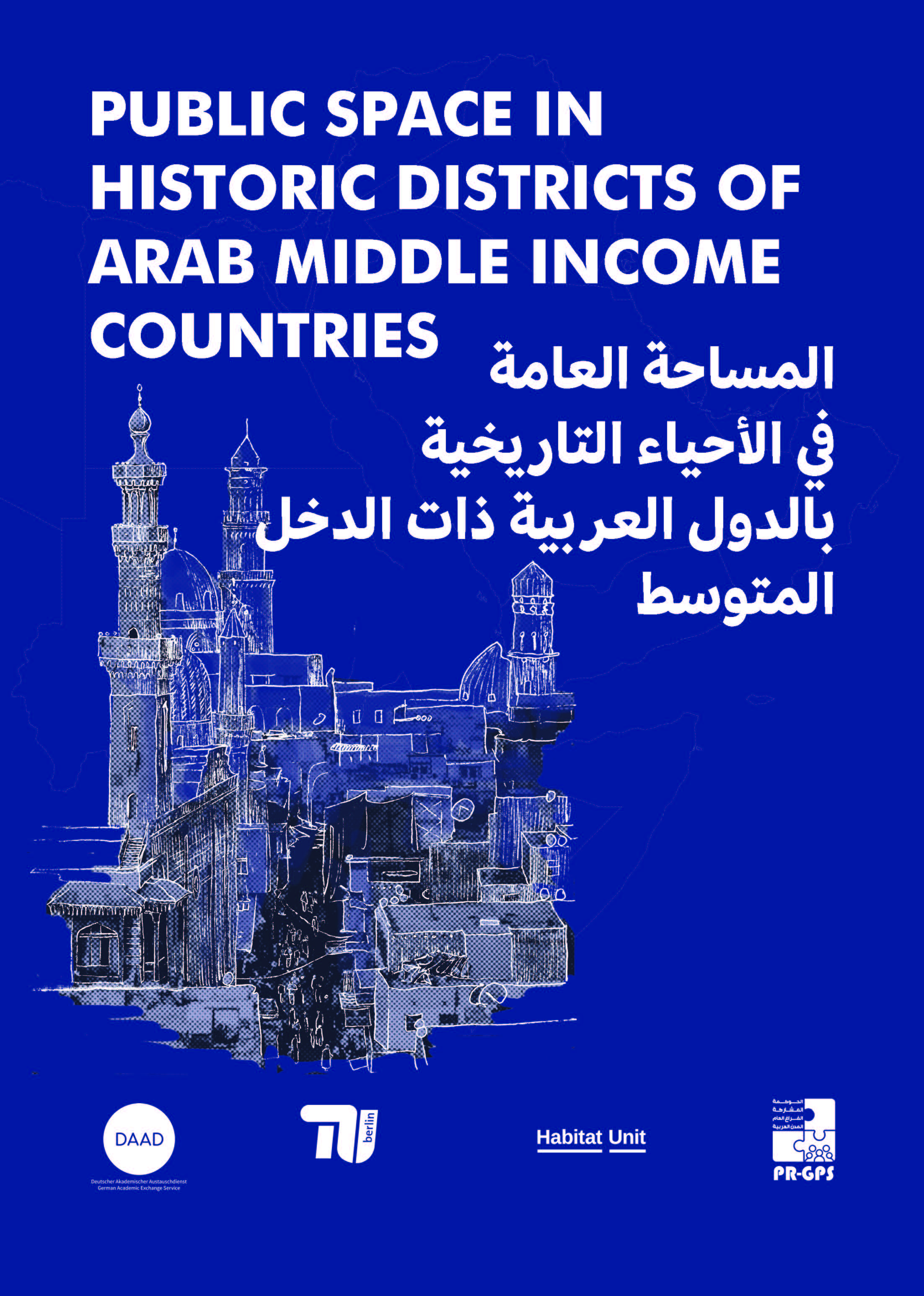
Through comparative case studies of medinas, souks, squares, and archaeological sites, the publication explores how governance, preservation, and community use intersect in shaping public spaces. It highlights both the resilience and fragility of these environments, where heritage conservation must balance everyday life with global heritage recognition. This book provides insights for scholars, practitioners, and policymakers working at the crossroads of historic preservation and contemporary urban transformation.
This report is a part of the Power Relations in Urban Governance: Participation in Public Space of the Arab Cities (PR-GPS), funded by DAAD the program of Ta‘ziz Partnerschaft - Netzwerke 2023-2025.
Authors:
Rula Badran, Nadine Hani Abdelghani, Tessa Heiden, Alec Jil Agopian, Stephanie Kubus, Tomás Martínez, Carla Mutsuki Mastroscianni, Sophia Reitz, Tata Zakaraia
Download here.
Public Spaces in Post-Conflict Arab Cities
The publication examines how years of war and instability in Iraq, Syria, Lebanon, and Libya have reshaped the urban landscape and the role of collective spaces. Drawing on case studies and international comparisons, the publication explores how reconstruction, rehabilitation, restoration, and revitalization intersect with questions of heritage, identity, and social healing.
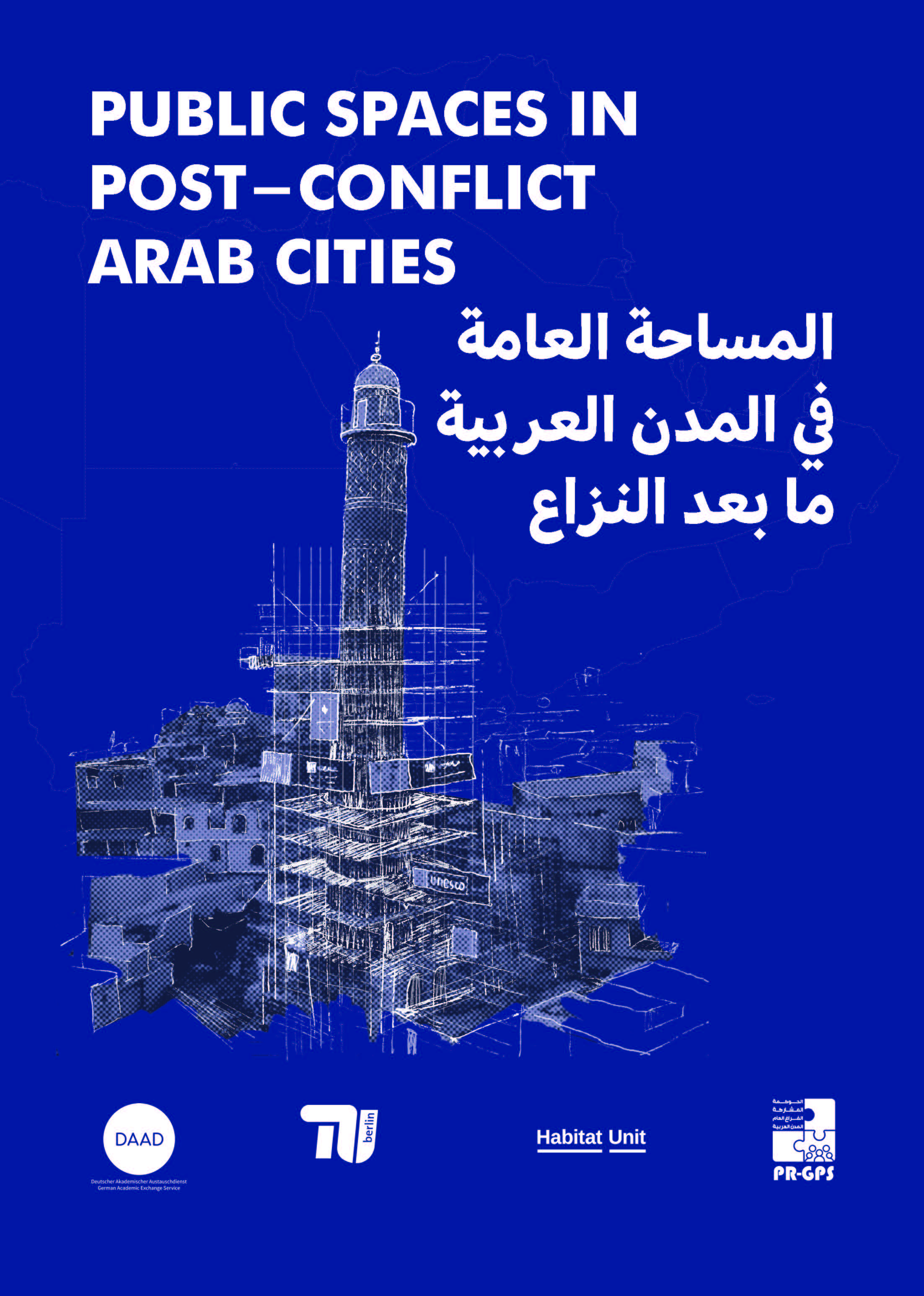
From Martyrs’ Square in Beirut to Aleppo’s Old Souk, from Mosul’s Old City to Benghazi’s Scout Park, the study highlights both the challenges and opportunities of rebuilding communal life after conflict. By situating public spaces as arenas of resilience, protest, and reconciliation, it sheds light on the political and cultural stakes of urban recovery. Produced within the PRGPS research framework, and supported by Habitat Unit and DAAD’s Ta‘ziz Partnerschaft program, this book provides critical insights for academics, practitioners, and policymakers engaged in post-war urbanism.
This report is a part of the Power Relations in Urban Governance: Participation in Public Space of the Arab Cities (PR-GPS), funded by DAAD the program of Ta‘ziz Partnerschaft - Netzwerke 2023-2025.
Authors:
Zubaidah Aali, Mar Novella, Johanna Scocco, Inci Sagirbas, Hugh Gleeson, Michael Krach, Tim Plaga, Alec Rovensky, Elena Spatz
Download here.
Food Security in Arab Cities
This publication examines the food security landscape across the Arab region, where climate stress, water scarcity, conflict, and rapid urbanization intersect with long-standing agricultural traditions. Through a comparative framework covering Gulf countries, Conflict and Post-Conflict contexts, Middle-Income Countries, and Least Developed Countries, the report highlights how geography, governance, and economic disparities shape access to food and the resilience of national food systems.
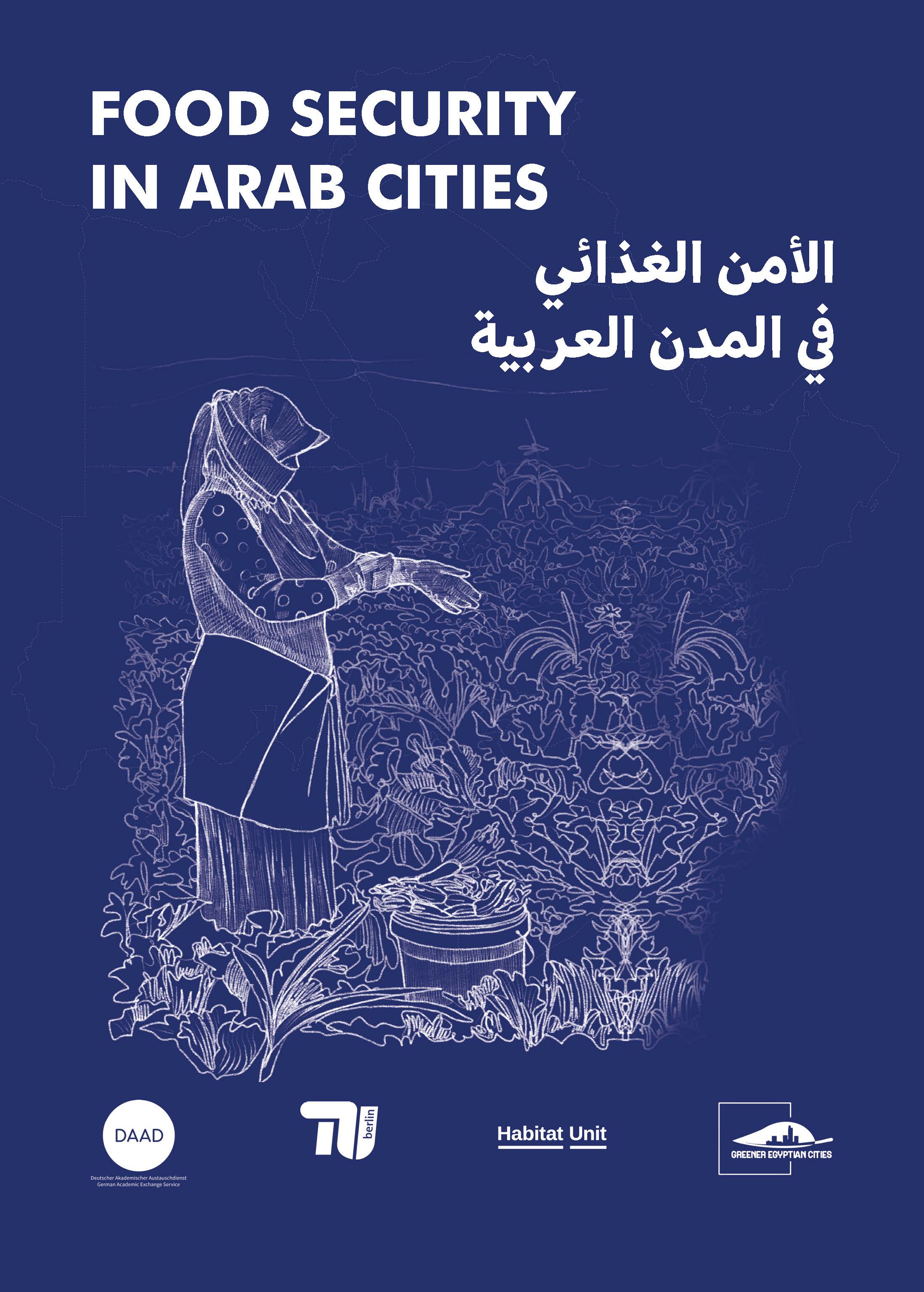
Drawing on case studies from Egypt, Morocco, Algeria, Jordan, and beyond, the publication explores how urban and peri-urban agriculture, innovative technologies such as hydroponics, and community-based initiatives like Urban Greens and SEKEM address challenges of availability, affordability, and sustainability. These examples show how local actors, whether governments, grassroots organizations, or hybrid partnerships, are experimenting with spatial and social interventions to strengthen food security in both rural and urban settings.
Produced within the Contemporary Arab Urbanism V: Exploring the Future of Arab Cities seminar at the Habitat Unit, TU Berlin, this report brings together design-led research and policy analysis. It offers insights for scholars, practitioners, and policymakers working to build more equitable, resilient, and sustainable food systems across the Arab world.
Authors:
Gulf Cooperation Council Countries: Zubaidah Aali, Tessa Heiden, Max Komorek, Mar Novella, Delphine Pineau, Sophie Reitz, Alec Rovensky, Johanna Scocco
Conflict and Post-Conflict Countries: Hugh Gleeson, Alec Jil Agopian, Michael Krach, Daria Kurbatova, Carla Mutsuki Mastrosciani, Tim Plaga, Inci Sağırbaş, Elena Mercedes Spatz, Zofia Zatorska
Middle Income Countries: Rula Badran, Maryam Gharavi, Celia González Coscollá, Nadine Hani Abdelghani, Stephanie Kubus, Tomás Martínez, Diego Regalado Gil, Tata Zakaraia
Least Developed Countries: Tolga Dervis, Bailey Gray, Augustin Heinen, Caterina Ricci, Omar Tbakhi
Download here.
Paths of Recovery: Reconstruction in Post-Conflict Arab Cities
This publication examines the landscape of reconstruction across Arab post-conflict countries, where years of war, displacement, and institutional collapse intersect with long-standing social, political, and territorial complexities. Through a comparative framework covering Yemen, Iraq, Syria, Lebanon, Palestine, and Sudan, the report highlights how history, governance capacities, and geopolitical interests shape the pace and direction of recovery efforts in cities and regions marked by profound destruction.
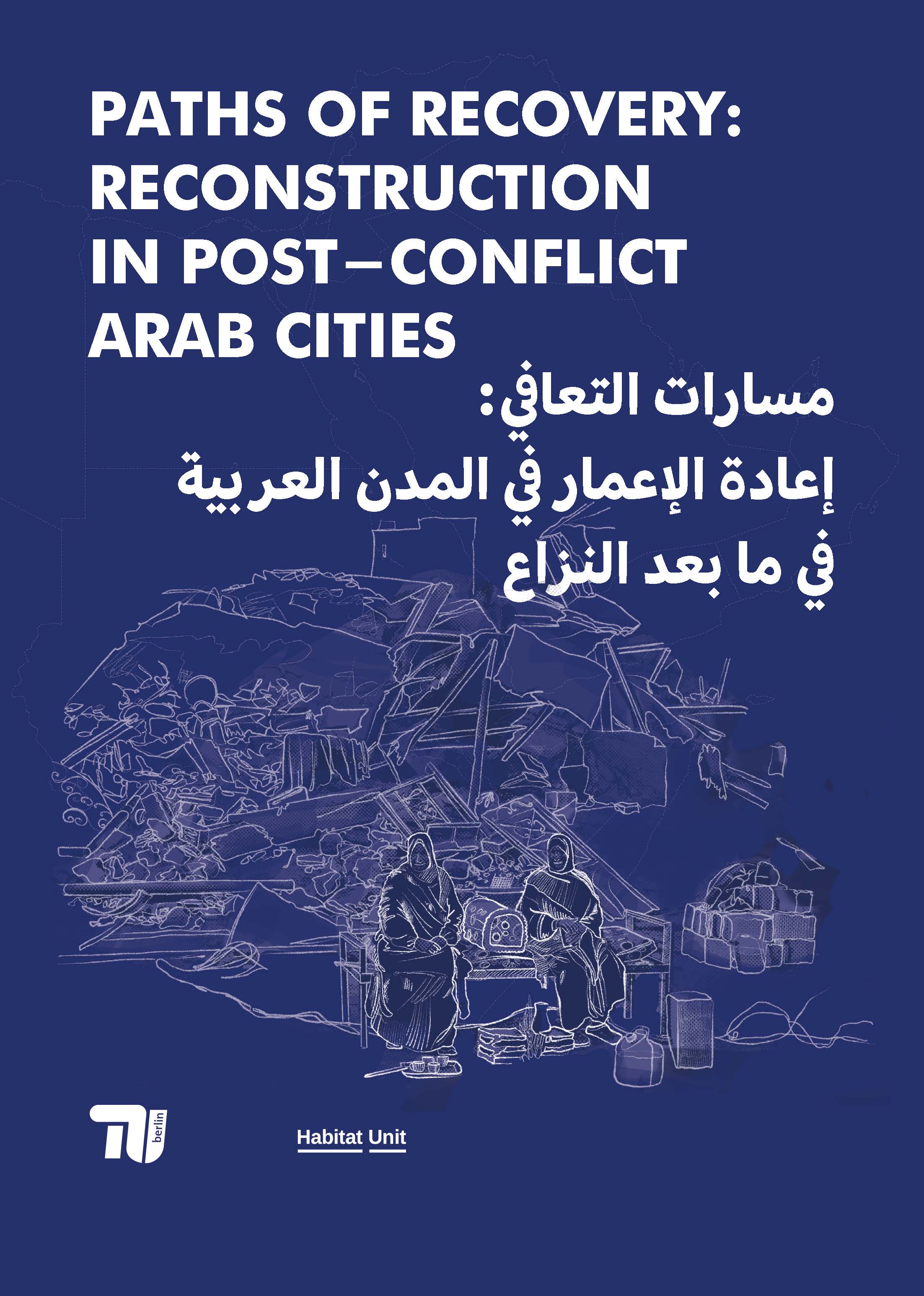
Drawing on case studies ranging from grassroots community-led initiatives to large-scale state, donor, and private- sector interventions, the publication explores how different actors approach rebuilding housing, infrastructure, public services, and social networks. These examples illustrate the tensions between centralized planning and local agency, the competing visions of regional powers, and the ways in which communities improvise solutions amid fragmented authority, scarce resources, and ongoing humanitarian challenges.
Produced within the Contemporary Arab Urbanism VI: Reconstruction in Arab Post-Conflict Countries seminar at the Habitat Unit, TU Berlin, this report brings together spatial analysis, policy research, and documentation of on-the-ground practices. It offers insights for scholars, practitioners, and policymakers working to support more inclusive, resilient, and context- sensitive pathways toward recovery across the Arab region.
Authors:
Yemen: Carla Mutsuki Mastroscianni, Eileen, Youssef, Elena Spatz
Iraq: Nura Mohammed Ahmed, Ghita Zerrou, Sophie Held, Theresa Stahl
Lebanon: Amalia Ardian, Ara Song, Sucheta
Syria: Joshuah Emerson, Thomas Baptista, Sebastian Reinicke, Maximilian Janse, Eiad Alnofal Palestine: Hugh Gleeson, Kaja Terze, Tomas Martinez, Diego Regalado, Omar Tbakhi
Sudan: Ahmed Abdalla, Emma Cano, Mar Novella
Download here.
Redefining Public Space in 'Ira, As-Salt
The publication presents the outcomes of the PR-GPS workshop held in February 2024. The program brought together students and researchers from Technische Universität Berlin, the German Jordanian University, Philadelphia University, Masarat Jordan Development Foundation, and regional experts to examine the role of participation in local urban governance.
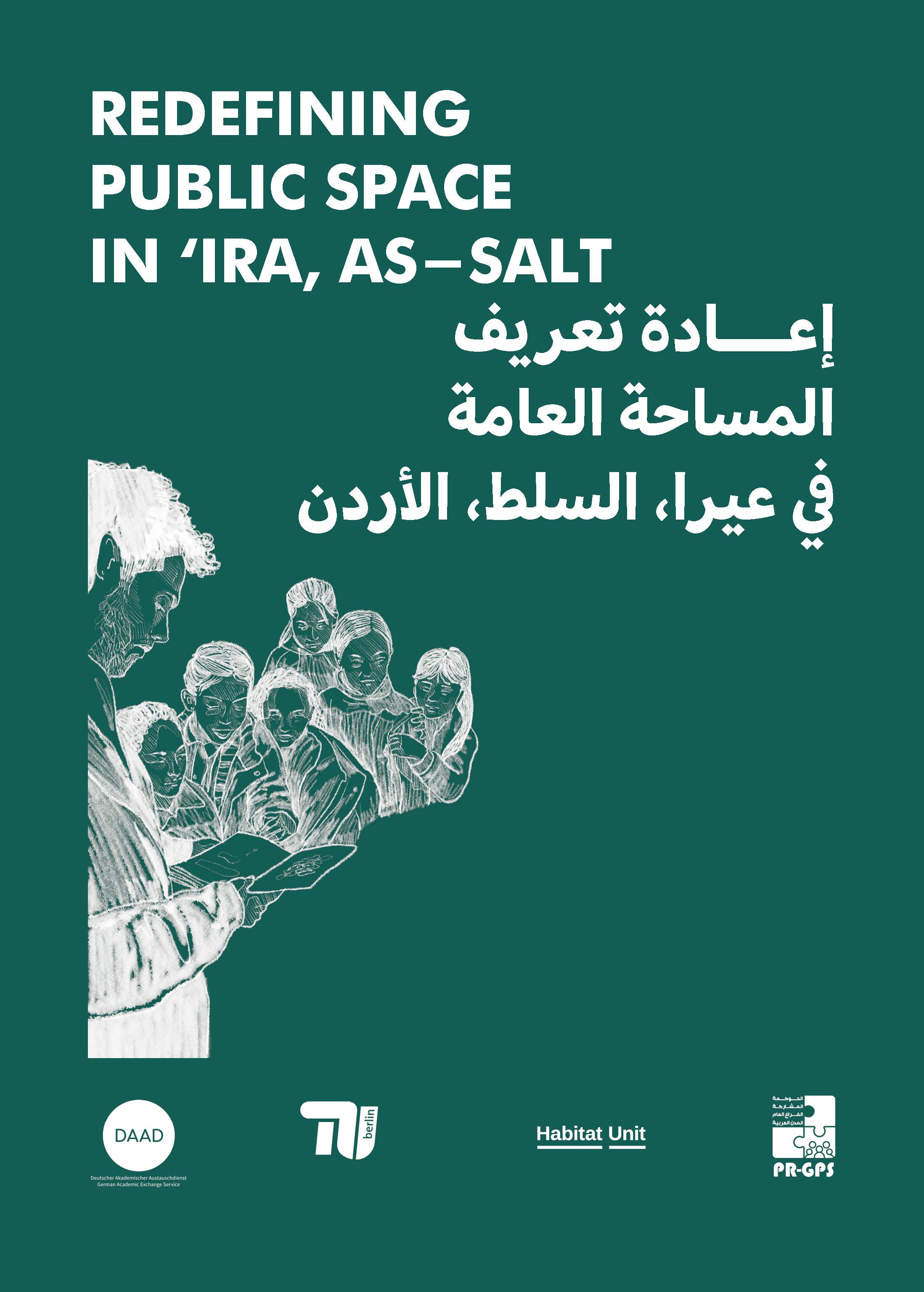
Focusing on a neglected municipal garden in Ira, a village within As-Salt, the team combined fieldwork, community interviews, and participatory design sessions with residents, municipal staff, and civil society. The process culminated in small-scale interventions including a playground, seating areas, murals, and new vegetation, transforming the site into a more inclusive and vibrant public space. Supported by DAAD’s Ta‘ziz Partnerschaft program and Habitat Unit, this publication highlights collaborative methods that engage local communities as active partners in shaping their urban environments.
This report is a part of the Power Relations in Urban Governance: Participation in Public Space of the Arab Cities (PR-GPS), funded by DAAD the program of Ta‘ziz Partnerschaft - Netzwerke 2023-2025.
Authors:
Dr. Hassan Elmouelhi, Hellen Aziz
Master Students of the TU Berlin, Habitat Unit: Amalia Dewi Ardianingsih, Bayan Mirzakeyeve, Nadine Abdelghani, Omar Tbakhi, Salma ElBasty, Stephanie Pyalanda, Zofia Zatorska, Zubaidah Aali
Download here.
Redefining Public Space in Duhok
The publication documents the outcomes of the international PR-GPS workshop held in April 2025. Bringing together students and researchers from the University of Duhok, Technische Universität Berlin, and partner institutions, the workshop explored how participatory urban design can strengthen community life in the Kurdistan Region of Iraq.
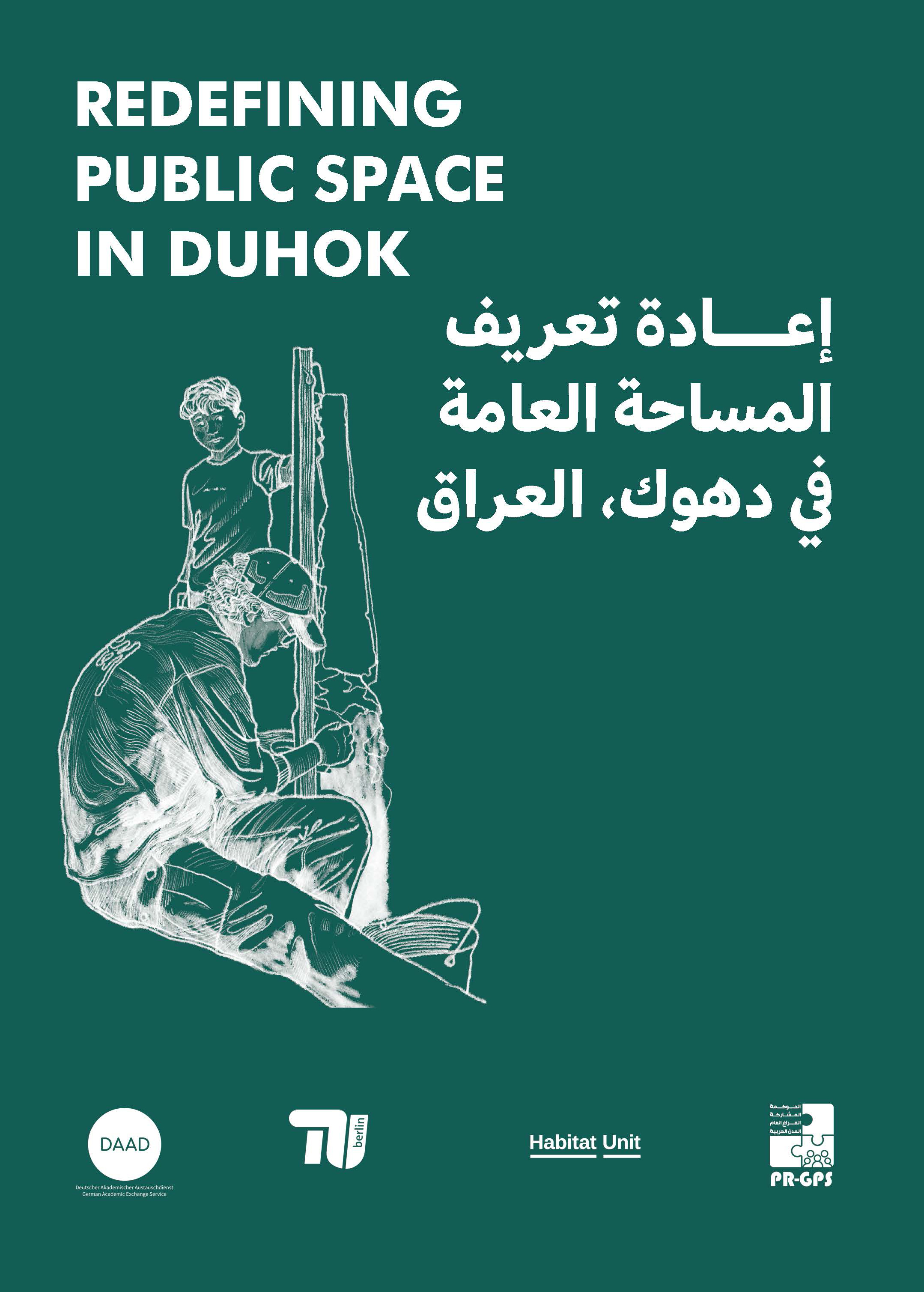
Focusing on Murad Park in Sumel District, the team applied a multi-scalar methodology, from city-wide analysis to site-specific design and on-site implementation. The result is not only a transformed neighborhood park, but also a replicable model for inclusive public space development.
This publication combines research, design, and practice, offering insights into collaborative methods that place residents at the center of urban change.
This report is a part of the Power Relations in Urban Governance: Participation in Public Space of the Arab Cities (PR-GPS), funded by DAAD the program of Ta‘ziz Partnerschaft - Netzwerke 2023-2025.
Authors:
Elena Spatz, Sophia Reitz, Bailey Gray, Augustin Heinen, İnci Nazlıcan Sağırbaş Michael Krach, Carla Mutsuki Mastroscianni, Zubaidah Aali, Zofia Zatorska, Nadine Hani Abdelghani, Tim Plaga, Daria Kurbatova, Omar Tbakhi, Mar Novella Gómez
Download here.